Saturday, May 19, 2012

Hội thảo: Social Media & Bài toán kinh tế cho Doanh nghiệp vừa và nhỏ

Khủng hoảng kinh tế đang lan rộng…

Chỉ số giá tiêu dùng(CPI) tăng …

Hàng chục nghìn doanh nghiệp tuyên bố phá sản…

Chính phủ đang dự kiến chi 26.000 tỷ đồng để “cứu” doanh nghiệp… [Xem thêm tại đây]


Tổng Cục Thống Kê - chỉ số giá tiêu dùng
 Nguồn: Tổng Cục Thống Kê

Với bức tranh ảm đạm của tình hình kinh tế Việt Nam quý 1 năm 2012 đã khiến nhiều doanh nghiệp (từ nhỏ tới lớn) đều phải gấp rút đưa ra chiến lược hoạt động nhằm “Sống Sót”.
Có nhiều bài toán được đưa ra tuy nhiên trong nội dung bài viết này, Giải Pháp Số chỉ đề cập tới giải pháp dành cho doanh nghiệp vừa và nhỏ trong việc ứng dụng Social Media cho việc quảng cáo, tiếp thị và bán sản phẩm. Một trong những chiến lược cắt giảm chi phí và nhân lực hiện nay!
Để bám sát vào chủ đề, Giải Pháp Số xin đưa ra một số phân tích dựa trên sự kiện: ”Truyền Thông trên Mạng Xã Hội – Cơ hội nào cho các doanh nghiệp vừa và nhỏ” do Zing Me tổ chức diễn ra vào chiều ngày 03/05 tại trụ sở của công ty cổ phần VNG, tầng 13, tòa nhà Fleminton, 182 Lê Đại Hành, Quận 11, Tp. HCM.
Mặc dù chủ đề của buổi hội thảo hướng người dùng (chủ yếu là các doanh nghiệp vừa và nhỏ) tiến tới sử dụng các công cụ trên nền tảng Zing Me để phục vụ cho công tác quảng cáo, thương mại điện tử tuy nhiên trong nội dung chia sẻ vẫn được các diễn giả mở rộng thêm các kênh liên quan như Facebook, Twitter, Google+… để người nghe có thể so sánh và hình dung rõ hơn về hiện trạng Social Media tại Việt Nam.

1. Bài thuyết trình của Tony Trương (Giám đốc điều hành Golden Digital):
http://me.zing.vn/apps/sharefile?params=%2Fdownload%2Fdownloadfile%2Ffile%2FODIxKzEyODI1NDI3


Phân tích: Bài chia sẻ của Tony Trương đưa ra những khái niệm hết sức cơ bản về Social Media, giúp người nghe có thể dễ dàng hiểu được mô hình và cách thức vận hành của Social Media.
Tony cũng đưa ra khá nhiều ví dụ cụ thể về việc ứng dụng Social Media vào thực tế ví dụ như sử dụng Facebook và Zing Me để mở shop thời trang, tạo ứng dụng hỗ trợ người dùng, sử dụng công cụ đo lường hiệu quả (slide 29-39). Cuối cùng anh chỉ tóm gọn lại 3 bước mà các doanh nghiệp vừa và nhỏ có thể làm với Social Media (slide 41-43)
Bước 1: Tạo Trang
Bước 2: Tạo nội dung hấp dẫn và “đúng đề”
Bước 3: Quảng cáo để kéo độc giả
*Một số vấn đề cần lưu ý mà Tony đề cập khi làm Social Media không có trong slide mà GPS thấy khá hay đó là:
- Social Media phải đi từ những trải nghiệm của người dùng về sản phẩm, dịch vụ. Do đó anh phải có sản phẩm tốt thì mới nên làm Social Media. Trích dẫn một câu nói đùa của Tony: “Nếu sản phẩm của các anh chị như Shi!! thì người ta chửi là đúng rồi!”  :)
- Đầu tư vào chất lượng fan, chất lượng nội dung, không chạy theo số lượng!  :love:
Giải Pháp Số chỉ muốn thêm một số ý sau: Các doanh nghiệp vừa và nhỏ cần tham khảo thêm các chuyên gia về kinh nghiệm:
- Kinh nghiệm tạo nội dung sao cho phù hợp, lôi cuốn đối tượng khách hàng tiềm năng. Nếu không làm tốt khâu này thì doanh nghiệp rất dễ nản khi trong thời gian đầu không ai biết, tin tưởng và tương tác với fanpage.
- Kinh nghiệm tận dụng tài khoản cá nhân để làm social media trước khi áp dụng cho fanpage doanh nghiệp, cách tiếp cận và hợp tác với những người có ảnh hưởng trong cộng đồng để PR thương hiệu.

2. Bài thuyết trình của ông Đặng Quốc Cường (Giám đốc điều hành Eleven Communications):
http://me.zing.vn/apps/sharefile?params=%2Fdownload%2Fdownloadfile%2Ffile%2FODE5KzEyODI1NDI3

Phân tích: Bài chia sẻ của anh Cường xoáy sâu vào chủ đề chính: “CƠ HỘI VÀ THÁCH THỨC CHO DOANH NGHIỆP VỪA VÀ NHỎ TRÊN MXH”
Thuận lợi: Doanh nghiệp vừa và nhỏ đang chiếm ưu thế hơn so với các doanh nghiệp lớn về khoản ứng dụng Social Media vào việc kinh doanh (Slide 7). Trong quan điểm này, GPS thấy rằng anh Cường đang làm công tác tư tưởng vực dậy niềm tin cho các doanh nghiệp vừa và nhỏ có thể nhận ra được lợi thế của mình chứ không phải là hơn hẳn các doanh nghiệp lớn!  :)
Các doanh nghiệp lớn một khi họ đã làm thì làm rất lớn, bài bản => Các doanh nghiệp nhỏ cần học hỏi ở khâu tổ chức, xây dựng ý tưởng, nội dung, cách thức triển khai!  ;)
Khó khăn & Thách thức: Sự thật phũ phàng: doanh nghiệp vừa và nhỏ thì lúc nào cũng thiếu Tiền, Chiến lược, Công cụ, Nhân lực! (Slide 8.)
Cơ hội & Giải pháp: Trong khó khăn luôn tồn tại nhiều cơ hội, điều này hoàn toàn đúng.  :love: Anh Cường cũng đưa ra một số nhận định về cơ hội cũng như giải pháp Social Media để giải quyết các vấn đề khó khăn bên trên. Các slide từ 10 – 17 hơi khó hình dung tuy nhiên GPS có thể tóm gọn như sau:
- Xây dựng chiến lược Thiết thực và Khép kín trong môi trường MXH (slide 9,10) => Giải quyết bài toán về chiến lược
- Nắm bắt xu hướng Social Media và công nghệ di động + thói quen thanh toán online => Giải quyết bài toán công cụ. Tiến tới xây dựng ứng dụng trên nền tảng mobile =: Cái này nghe có vẻ hơi cao cấp đối với các doanh nghiệp không thuộc lĩnh vực công nghệ cao. Tuy nhiên từ từ rồi tính!  :)
- Tận dụng sự hỗ trợ từ phía nhà cung cấp dịch vụ MXH để giải quyết bài toán Nhân lực => Đúng!  ;)
- Tận dụng trải nghiệm của khách hàng để tạo ra sự lan truyền trên môi trường MXH => Thúc đẩy quảng cáo thương hiệu, bán hàng =>Giải quyết được bài toán chi phí

3. Bài thuyết trình của bà Hoàng Thùy Linh (Giám đốc Marketing bộ phận Phát triển kinh doanh mạng xã hội Zing Me):
http://me.zing.vn/apps/sharefile?params=%2Fdownload%2Fdownloadfile%2Ffile%2FODIwKzEyODI1NDI3


Bài thuyết trình của Ms. Hoàng Thùy Linh khá ấn tượng với các con số thống kê, rất chi tiết về quy trình xây dựng fanpage trên Zing Me và bao gồm luôn cả một Case Study (MOF cafe) rất thiết thực. Tuy nhiên GPS thấy rằng bài thuyết trình hơi thiên về chi tiết kỹ thuật quá trong khi khán giả thì đã có vẻ hơi mệt mỏi! Nếu được thỉ để sang phần sau Tea-break sẽ tốt hơn, và nếu được hơn nữa thì nên chia cho anh Đức Trọng nửa bài sau :D
Phân tích: Các doanh nghiệp vừa và nhỏ nếu thực sự quan tâm tới giải pháp của Zing Me thì nên xem kỹ bài thuyết trình này. GPS có thể tóm lược như sau:
Phần 1 (từ slide 1-10): Thông tin tổng quan về Zing Me, phân tích người dùng cũng như thói quen mua sắm trên MXH này. => Awesome!  :-[)
Phần 2 (từ slide 11-22): Case study về quy trình xây dựng thương hiệu trên Zing Me => Thiết thực!
Phần 3 (từ slide 23-hết): Các công cụ hỗ trợ mà Zing Me có thể cung cấp cho doanh nghiệp trong việc vận hành trang fanpage. => Đây là lợi thế lớn nhất của Zing me so với Facebook!

4. Phần hỏi đáp, chia sẻ của các chuyên gia Social Media

Có thể nói phần thảo luận này gây hứng thú nhất trong buổi hội thảo, GPS cũng đánh giá rất cao những thông tin chia sẻ hết sức chân tình của các diễn giả, chuyên gia! GPS xin tóm gọn một số thông tin hỏi đáp và thảo luận như sau:
- Quản lý rủi ro khi làm social media: Làm sao để tránh được bị nói xấu, “dìm hàng” => Đơn giản thôi, cố gắng cung cấp sản phẩm, nội dung cho tốt vào! Nếu bị chơi xấu thì cứ bình tĩnh, tận dụng sự ủng hộ của fan. Nếu lỗi do mình thì cứ ngoan ngoãn nhận và sửa sai nhé!  :)
- Công cụ quản lý rủi ro: Đại diện bộ phận kỹ thuật của Zing Me cũng đã bật mí về công cụ có khả năng theo dõi, đo lường thông tin phản hồi liên quan đến thương hiệu! => Cool!
- Mua fans: Rẻ lắm, trên facebook thì chỉ khoảng 1000VND/fan thôi! Trên mạng người ta bán đầy ra đó :o: . Các chuyên gia còn để cập luôn tới cách “câu” fan (tạo apps, mua facebook ads) mà nhiều trang fanpage đang làm. Tuy nhiên các chuyên gia đều nhấn mạnh: Hãy quan tâm tới chất lượng và độ trung thành của fan! Điều đó quan trọng hơn tất cả!

Phù phù phù!!!!!!!!! Xong rồi đấy! Mọi người từ từ nghiên cứu thêm nhé!

Kết luận:
1. Social Media là một chọn lựa không tồi trong giai đoạn khủng hoảng kinh tế đang diễn ra
2. Các doanh nghiệp vừa và nhỏ nên nghiên cứu kỹ cách thức và kinh nghiệm triển khai trước khi bắt tay vào làm Social Media để tránh rủi ro.
3. Mạnh dạn & Kiên trì – không có việc là khó, chỉ sợ lòng không bền (tiền không nhiều thì rõ rồi)!  ;)

Chúc các bạn thành công!
(Nguồn giải pháp số .info)

Thursday, May 17, 2012

IPO đại thắng, Facebook vượt mặt hàng loạt tập đoàn “đại gia”

Mạng xã hội lớn nhất thế giới Facebook vừa đại thắng trong đợt chào bán cổ phiếu lần đầu ra công chúng (IPO) giúp thu về hơn 16 tỷ USD. Với thành công này, họ đã vượt qua hàng loạt “đại gia” như Dell, HP, Nokia, Starbucks hay Disney.


Trong đợt IPO lần này, Facebook chào bán 421,2 triệu cổ phiếu với khoảng 60% đến từ các cổ đông nội bộ và các cổ đông hiện hữu khác. Trước giờ IPO, mức giá được kỳ vọng là khoảng 34 – 38 USD/cổ phiếu. Và cuối cùng các nhà đầu tư chấp thuận mua ở mức 38 USD.
facebook
Facebook đã thắng lớn từ đợt IPO
Kết quả này giúp Facebook trở thành công ty thuộc lĩnh vực internet IPO thành công nhất từ trước đến nay, đồng thời là đợt IPO lớn thứ 2 trong lịch sử nước Mỹ, chỉ sau tập đoàn thẻ tín dụng Visa và vượt qua cả hãng ô tô GM. Dự kiến vào 11 giờ (giờ New York) ngày 18/5, mạng xã hội lớn nhất thế giới sẽ chính thức chào sàn Nasdaq dưới mã FB.
Đợt IPO này đã nâng tổng giá trị thị trường của Facebook lên mức 104 tỷ USD và có thể còn tiếp tục tăng khi chính thức được giao dịch. Điều đó có nghĩa là công ty mới 8 năm tuổi này đã vượt mặt nhiều “đại gia” tên tuổi trên thị trường chứng khoán. Cụ thể, Facebook đang có giá trị gấp 10 lần Nokia, bằng 2 lần HP, một trong những nhà sản xuất máy tính lớn nhất thế giới. HP hiện chỉ có giá trị khoảng 44 tỷ USD.
Một nhà sản xuất máy tính tên tuổi khác là Dell (26 tỷ USD) cũng mới bằng 1/4 mạng xã hội do Mark Zuckerberg sáng lập. Starbucks, nhà bán lẻ cà phê số 1 tại Mỹ cũng chỉ được định giá 40 tỷ USD, thua xa Facebook. Thậm chí kể cả Disney, tập đoàn sở hữu kênh thể thao ESPN cùng hàng loạt công ty giải trí, hãng phim khác cũng chỉ có thị giá 80 tỷ USD.
Về phần CEO Mark Zuckerberg, đợt IPO này đã giúp anh trở thành tỷ phú giàu thứ 29 thế giới bởi lượng cổ phần và quyền chọn anh nắm giữ hiện được định giá tới 19,1 tỷ USD. Theo Bloomberg, gới khối tài sản khổng lồ này, Mark vượt qua các bậc “đàn anh” Sergey Brin và Larry Page, những người sáng lập ra Google.
Thanh Tùng
Tổng hợp(vnexpress)

Knowledge Graph - Công cụ tìm kiếm của Google sẽ thông minh hơn gấp 1.000 lần


Để nắm vững hơn “ngôi vương” trên thị trường tìm kiếm, vốn đang bị cạnh tranh kịch liệt từ công cụ tìm kiếm Bing của Microsoft, Google vừa trình làng thêm tính năng mới cho công cụ tìm kiếm của mình, hứa hẹn sẽ giúp Google tìm kiếm “thông minh hơn gấp 1.000 lần”. Google vừa trình làng thêm tính năng mới với tên gọi Knowledge Graph cho công cụ tìm kiếm của mình, xuất hiện đầu tiên với người dùng tại Mỹ trong vài ngày tới và dự kiến sẽ xuất hiện trên toàn cầu trong thời gian không lâu.

Cụ thể, tính năng mới này sẽ cung cấp những dữ liệu kèm theo trong một khung riêng biệt, bên cạnh các kết quả truy tìm kiếm như trước đây, cung cấp thêm thông tin chi tiết liên quan đến cụm từ tìm kiếm.

Chẳng hạn khi người dùng tìm kiếm tên của một danh nhân nào đó, Knowledge Graph sẽ hiển thị thêm thông tin liên quan đến nhân vật đó, như ngày sinh, ngày mất, trình độ học vấn, gia đình hay những công trình nghiên cứu, tác phẩm nổi bật…


Công nghệ tìm kiếm mới của Google sẽ liên kết các thông tin lại với nhau để đưa ra kết quả phù hợp nhất với nội dung tìm kiếm

Theo Jack Menzel, Giám đốc Quản lý sản phẩm Tìm kiếm của Google thì cơ sở dữ liệu mới của Google chứa thông tin của hơn 500 triệu đối tượng khác nhau, bao gồm con người, địa điểm và nhiều thứ khác. Qua đó có thể cung cấp thông tin chi tiết về nội dung tìm kiếm cho người dùng ngay trên trang kết quả tìm kiếm ngay cả khi người dùng không cần nhấn vào các kết quả tìm được.

Nói một cách khác, công nghệ mới của Google sẽ hiểu hơn cách mà người dùng nghĩ khi họ tiến hành tìm kiếm, rồi giúp người dùng phân biệt các kết quả tìm kiếm với nhau.

Chẳng hạn, khi tìm kiếm với  từ khóa “Kings”, Google sẽ suy đoán rằng người dùng đang đề cập đến tên gọi của một đôi khúc côn cầu, một đội bóng rỗ hay một chương trình truyền hình… rồi tính năng Knowledge Graph sẽ liệt kê ra thành các nhóm riêng biệt trên từng hộp thoại riêng biệt, bên cạnh các kết quả tìm kiếm truyền thống.

Khi tìm kiếm tên người, thông tin tổng quát về nhân vật đó sẽ được hiển thị bên cạnh kết quả truyền thống

Người dùng có thể chọn 1 trong những thông tin tìm kiếm do Knowledge Graph gợi ý để thu gọn kết quả tìm kiếm, giúp tìm được nội dung dễ dàng hơn.

Theo Menzel, trước khi tính năng Knowledge Graph được trang bị, Google đã “trang bị những kiến thức liên quan đến từ khóa tìm kiếm cho người dùng, mà chỉ đơn thuần đưa ra kết quả tìm kiếm dựa vào những từ khóa có xuất hiện trên nội dung của trang web. Nhưng giờ đây, với tính năng mới đã làm thay đổi hoàn toàn điều này.

“Chúng tôi muốn mang đến những thông tin chi tiết nhất để giúp bạn có được những thông tin cần  thiết để giải quyết công việc của mình một cách nhanh chóng nhất. Chúng tôi muốn hướng dẫn bạn thông qua quá trình truy vấn, thay vì phải thông qua các kết quả tìm kiếm như trước đây”, Jack Menzel cho biết.

Tính năng mới của Google ưu tiên hàng đầu quyền lợi của người dùng

Một điều khiến không ít các nhà phát triển trang web cảm thấy lo ngại đó là với tính năng mới, liệu người dùng có còn truy cập vào các trang web liệt kê trên kết quả tìm kiếm hay không, hay với họ, những thông tin do Knowledge Graph cung cấp là quá đủ?

Thông tin tổng quát, các tác phẩm và những cá nhân liên quan đến nhân vật tìm kiếm sẽ được liệt kê, giúp người dùng có cái nhìn tổng quan nhất về từ khóa tìm kiếm

Menzel cũng đã trấn an các nhà phát triển website rằng điều này sẽ không xảy ra.

“Chúng tôi nhận thấy rằng bằng cách tạo ra một bản thông tin tóm tắt tốt hơn sẽ giúp người dùng nắm bắt được thông tin cần thiết một cách tổng thể và lôi kéo hộ đi sâu hơn để tìm kiếm. Điều này sẽ không làm họ rời xa những kết quả tìm kiếm truyền thống”, Menzel cho biết.

Tuy nhiên, Menzel cũng thừa nhận rằng trong một số trường hợp, thông tin được cung cấp bởi tính năng Knowledge Graph đã đủ làm hài lòng người dùng và họ không tiếp tục truy cập vào các trang web từ kết quả tìm kiếm. Dù vậy, Menzel cho rằng trong trường hợp này, hơn ai hết người dùng chính là những người được lợi nhất.

“Chúng tôi muôn hướng người dùng đến những thông tin liên quan nhất đến từ khóa mà họ tìm kiếm. Đôi khi chỉ là những thông tin tổng thể về từ khóa đó”, Menzel nói. “Và nhiệm vụ của Google là giúp họ giải quyết vấn đề một cách nhanh chóng và hiệu quả nhất có thể. Tuy nhiên, đôi khi nó lại làm ảnh hưởng đến quyền lợi của  các nhà phát triển website, nhưng trên hết, người dùng vẫn là ưu tiên hàng đầu của chúng tôi”.

Cỗ máy tìm kiếm thông minh đầu tiên trên thế giới?

Thực tế, tính năng Knowledge Graph đã giúp cho công cụ tìm kiếm của Google trở nên thông minh và hiểu người dùng hơn, nhưng trên thực tế, đây không phải là công cụ tìm kiếm đầu tiên trên thế giới có khả năng “hiểu” người dùng.

Một trong những công cụ tìm kiếm nổi tiếng với khả năng “hiểu” và trả lời những câu hỏi của người dùng có thể kể đến Wolfram Alpha, công cụ tìm kiếm được ra mắt từ năm 2009.

Wolfram Alpha cũng đã nổi tiếng với khả năng trả lời câu hỏi của người dùng

Nhiều công ty khác cũng đã cố gắng để xây dựng những cỗ máy tìm kiếm đưa ra kết quả theo ngữ cảnh, trong đó có thể kể đến Powerset (đã được Microsoft mua lại từ năm 2008) và Cuil, nhưng tất cả đều đã thất bại.
Trước khi hoàn tất tính năng Knowledge Graph, bản thân Google cũng đã thử phát triển những tính năng và công nghệ mới để đáp ứng khả năng tìm kiếm theo ngữ cảnh.

Cụ thể, trong năm 2010, Google đã mua lại công ty công nghệ Metaweb, hãng đã sáng tạo ra nền tảng cơ sở dữ liệu Freebase, mà theo Menzel, là một trong những “ý tưởng quan trọng nhất” để tạo nên tính năng Knowledge Graph ngày hôm nay.

Bên cạnh đó, Google cũng đã phát triển dự án với tên gọi Squared, là dự án dùng để trích xuất dữ liệu có cấu trúc từ những trang web không có cấu trúc. Dự án này cũng đã góp phần để giúp Knowledge Graph trở nên hoàn thiện hơn.

Mặc dù thừa nhận Google vẫn còn tiếp tục phải làm nhiều hơn để hoàn thiện khả năng tìm kiếm của mình, tuy nhiên Menzel vẫn tự tin rằng với Knowledge Graph, khả năng tìm kiếm của Google đã trở nên “thông minh” hơn gấp 1.000 lần so với trước đây.

Video giới thiệu về tính năng Knowledge Graph:


Phạm Thế Quang Huy
(nguồn http://dantri.com.vn/c119/s119-597046/cong-cu-tim-kiem-cua-google-se-thong-minh-hon-gap-1000-lan.htm)

Dịch vụ dẫn đường Google Maps tại VN hoạt động trở lại

Sau 5 ngày tạm ngưng, bản đồ trực tuyến của Google đã cho phép người sử dụng trong nước dùng lại chức năng direction.

Chức năng dẫn đường trên di động và PC đã hoạt động bình thường hôm nay.
Chức năng dẫn đường trên di động và PC của Google Maps đã hoạt động bình thường hôm nay.
Thử nghiệm trên thiết bị di động và máy tính cho thấy, tính năng này đã hoạt động bình thường. Hãng tìm kiếm Mỹ vẫn không đưa ra thông báo chính thức. Ngày 17/5, trả lời báo chí trong nước, đại diện của hãng ở Đông Nam Á cho biết sẽ ghi nhận tình trạng trên.
Nhiều người đoán rằng Google đang nâng cấp tính năng này. Tại Việt Nam, chức năng dẫn đường vẫn ở dạng đơn giản nhất và chưa hỗ trợ giọng nói. Google Maps là dịch vụ bản đồ trực tuyến lớn nhất thế giới. So với bản đồ Mỹ, Singapore, Đài Loan, tại Việt Nam, chức năng Street View (hình ảnh thực tế trên đường phố) vẫn chưa được triển khai.
Bên cạnh Google Maps, người dùng có thể sử dụng các nhiều dịch vụ khác nhau do các nhà cung cấp trong nước phát triển. Những ứng dụng này phần lớn có thể hoạt động offline, trong khi Google Maps đòi hỏi người dùng phải online.
Quốc Huy
(vnexpress)

5 Local Linkbuilding Ideas For The Post-Penguin/Panda Era

I have been fielding a lot of calls from sites big and small that believe they got hit by Penguin, Google’s “over-optimization” algorithm. Or maybe it was Panda? Who knows? Traffic is down and everybody is freaking out.
I have a particular soft spot in my heart for the small, local businesses that have been hit, in many cases because they bought into someone’s spammy linkbuilding scheme.
I have had a few discussions with other SEOs who are attempting to take down clients’ spammy looking links, and while that might be effective, the ROI on finding and getting all of those links deleted seems iffy at best.
This mindset gets at the heart of why the site had a problem with these wacky animal updates to begin with – linkbuilding is not a substitute for a marketing plan.
With that in mind, I thought I’d offer up all you localistas out there some tried and true local marketing tips that just so happen to also help generate links, hopefully without infuriating any Google algo-beasts:

1.  Sponsor My Kid’s Baseball Team

There’s not much for us parents to do while watching our little Jeters learn the fine art of hitting off a tee, so getting your name on their jerseys for cheap might be a good way to build awareness.
It also might get you a link or two from the league’s website which is what we call a “citation” in the local SEO biz.  Here’s an example. It also gives you an excuse to connect with all of the parents on Facebook if you’re into that kind of thing which brings me to my next idea…

2.  Doing Something Socially Good In Your Community

How about a fundraiser for cancer that gets you a link from one of the top newspaper sites in the area? Or maybe a charity golf tournament?

3.  Join Your Local Business Association

Sure, it’s a good networking opportunity, but chances are, you will also get some nice links/citations out of the deal. Check out the Pleasanton Downtown Association’s Business Directory (which is not very well optimized btw – Hey PDA, give me a call!).
Another upside of joining these types of groups is that they help market you.

4.  Run A Contest

The state of today’s media is that pictures of dogs with funny ties is news – see proof to the right. Well, so are pie eating contests.
If you need something to wash the pie down, how about a local brew crawl (promoted by the Pleasanton Downtown Association, btw)?

5.  Make A Video

One of the great things about the Web is that it’s super easy and cheap to make and distribute your own videos.
Find a local artiste who is looking to build their rep and have them whip out something for you that can get some attention (and links) like Presidential Car Wash.
I could go on, but hopefully by now you get the picture. For SEO to succeed over time, you have to invest in marketing your business.
If you stop thinking of SEO as some alien witch-crafty thing and start thinking of it as a natural compliment to your marketing plan (assuming you have a marketing plan that is) – you’ll find that the only Penguins and Pandas you need to worry about are the ones your kid is spending way too much money on on Farmville (excuse me if my farm is more exotic than yours).
Opinions expressed in the article are those of the guest author and not necessarily Search Engine Land.

Get These Three Things Right In Enterprise SEO

The other day in URLs café at Yahoo! headquarters in Sunnyvale, I had a great conversation with our head of SEO. He was telling me about significant recent success SEO has been enjoying at Yahoo!
At many large companies, SEO is an uphill battle, so any victory should be fully celebrated. I asked what happened that enabled him to be so wildly successful in this case, and he told me there were three things that caused an SEO tipping point:
  1. Executive Support
  2. SEO involvement early in the project
  3. SEO ownership of standards

Executive Support

As I’ve mentioned before, executive support is a prerequisite for SEO success in a big organization, so it’s great having leadership that is vocal about SEO.
As you may know, Yahoo! recently hired a new Chief Product Officer. He is a sharp, energetic leader who also happens to be a big fan of SEO – he mentions it at all-hands meetings, and even includes it as part of his monthly business reviews at CEO staff meetings. Since his arrival, many Yahoo! products are evolving with the imprint of his leadership.
One recent project involved a retooling of the building blocks of some of our media properties. The project, Yahoo! Publishing Platform, was meant to standardize publishing for our content-oriented properties such as news, sports, and finance, globally. News ended up being at the top of the list, and the product folks in News are huge fans of SEO.

Early & Often

While executive support is a necessary ingredient for SEO success, it’s not enough. I’ve written in the past about the approach to SEO that we try to take at Yahoo! Rather than auditing our Web properties once they’re built and trying to retool them for SEO purposes, we work to incorporate SEO into the products themselves throughout the design and implementation phases of development.
I’ve noted that we work this way out of necessity – once the sites are built and released, the teams that wrote the code generally disband and move on to other projects, reforming in different teams to build new products. So the audit-and-retool approach, while expensive and inefficient for most companies, doesn’t work at all for us.
As a result, products or sites we build are either released SEO-friendly or not, and they pretty much stay that way until they’re eventually replaced.
Build SEO into the product development cycle
Building SEO Into The Product Development Cycle

The real challenge, then, is getting SEOs in the right place at the right time and giving them the proper audience and support so they can do their jobs. When we follow that recipe, sometimes the simple things can make a big difference.
By working together in the early (and late) stages of development, SEO and Product were able to incorporate SEO requirements into the product development cycle. One of the smart moves here was prioritizing a small number of key SEO requirements that we knew would make a difference.

Own Your Standards

There were several long-standing and well-known issues with our news sites that we sought to address in this release. First off, we knew that our URLs were a big problem for search engines. Long and non-intuitive, these beasts had long ago been identified as one of the main culprits on our SEO most-wanted list.
Also, our tags weren’t standardized or automated with SEO in mind. Finally, the architecture of our legacy publishing system allowed for duplicate content, a well-documented SEO problem. The key to solving these SEO problems was to bake SEO-friendly standards and conventions into the product so that published content can’t be SEO un-friendly.
In SEO terms, the content platform is very inflexible. URLs are automatically generated from article titles with fixed ranges for keyword count in the URL. Subdirectory structure is strictly limited by design. Title and description tags are generated automatically. Editorial and SEO approval of content and tags is completely centralized.
SEO-friendly URLs at Yahoo! News
Yahoo! News' New URL Structure is Much More SEO-Friendly

From a product perspective, the initial features of the new sites are not major changes, but from an SEO point of view, they make an enormous difference. Now when articles are published, they generally appear with clean titles and URLs – globally. This was huge.
We’re talking triple-digit percentage increases in SEO traffic in some regions. Another great benefit of this standardization is that it eliminated a lot of the duplicate content out there. So we are now seeing large increases of SEO traffic on a significantly smaller number of pages. If you’re an SEO, that makes you smile.

What’s Next?

Editorial, that’s what. We’re in the process of hiring an editorial search lead for our media properties. In addition to working with editors on SEO-friendly titles for articles, this person can further the SEO cause by building and standardizing internal and external linking strategies.
Looking forward, such a resource could leverage search data to drive content development strategies, and also might assist in developing more robust standards for de-duplicating content on a more global basis.
Opinions expressed in the article are those of the guest author and not necessarily Search Engine Land.
(source http://searchengineland.com/get-these-three-things-right-in-enterprise-seo-87145)

24 Ways To Make Life Hard For Your SEO Team

While the industry is maturing, SEO still remains a largely misunderstood discipline. There are three main reasons for this:
  1. The search engines keep the details of their ranking algorithms private.
  2. There is a lot of bad information and misperceptions that are presented as SEO wisdom online.
  3. The algorithms search engines use are frequently changing.
As a consequence of this landscape, it takes real working experience to develop strong SEO skills – you can’t get them without it. Making changes and seeing what works and what doesn’t is simply a must. Even if your SEO team (or SEO agency) has that experience, there are a number of things that you can do to make life difficult for your SEO team.
Let me count the ways …

1.  Focusing On “SEO goals” Instead Of Business Goals

Too many enterprises get focused on goals that are artificial. For example, they focus on building 100 links per month. Seriously now. I can get you 100 links per month for $400 or less and they probably won’t do anything at all for you.
Other bad goals are specific rankings or PageRank increases. Your top level goals should nearly always be: increased relevant, non-branded search engine, traffic (NBSET), and increased conversions from NBSET. Align the SEO team goals with your company goals.

2.  Doing SEO In A Vacuum

SEO impacts a lot of different disciplines. The SEO team needs to be in close coordination with many parts of the enterprise, and those parts of the organization need to be aligned with the goals and what is required to meet them.

3.  Poor Communication With The Dev Team

One common problem is the lack of a strong communication channel, and strong trust between the dev team and the SEO team. One classic example is the 301 redirect. Most tools it seems default to 302 redirects, and the developers need to really be on board with why a 301 is preferred and understand that they need to check and verify it themselves.

4.  Poor Communication With Marketing

Love those pesky marketing folks, really, I do. But sometimes they can make decisions not realizing that what they are doing is blowing up the SEO efforts. I have seen situations where the marketing team insisted on titling pages of their site with their fancy product brand names that don’t have the slightest relationship to a phrase that users ever search on.

5.  Poor Communication With The Exec Team

This is one of the easiest way to throw a wrench in your SEO efforts. One enterprise I know decided to design their site for the C-suite. As a result, they promptly ripped most of the text off of their pages and slimmed down the site into a corporate brochure. Great way to make it very difficult for search engines to figure out what is special about your site!

6.  Poor Education At The Exec Level

It turns out that communication is not enough. The execs need to know enough about SEO to understand what they don’t know, and how and when it matters. Once they understand that, they will be far more likely to get SEO advice about the impact of a decision when they need it.

7.  No Centralized Coordination of SEO

Putting your SEO team in a position where they have to separately sell multiple groups in your organization is really going to hamper their efforts. Having good communication with marketing, development and the execs is necessary, but you also need to streamline it so it is efficient.

8.  Being Over-Focused On One Specific Goal

This happens often, and one of the most common hyper-focused goals is driving traffic on one specific keyword. This narrows your SEO efforts in a way that is too artificial.
In an environment as fluid and undefined as SEO, it is best to allow some freedom to pursue the areas that bring you the fastest/largest ROI. It is usually very difficult to discern where that will come from in advance.

9.  Making Decisions That Impact SEO Without Knowing It (Or Checking)

This is obviously related to the communication and education related problems. However, even if the communication channels are open, it still happens that people make decisions and don’t have the discipline to first ask if there is an SEO concern with the decision. Instill the discipline in your team to ask that key question before committing to that new “great idea” someone has.

10.  The Developer “Knows” SEO

Just like those marketing folks, I love the dev team too. But, it does happen that there are developers who say they know SEO, trust them, everything will be all right. One CTO I encountered insisted that 302 vs. 301 redirects did not matter because there was no way that the search engines would be so narrow in how they interpreted redirects.
Unless that developer has worked full time on SEO for 2 years or more (and I do mean FULL time), they don’t know SEO. They may have learned some things about it, but that is not the same thing as being an expert.

11.  Doing SEO “After The Fact” – Do It Right Or Do It Over!

The most common variation of this mistake is launching a new website or a site redesign and then bringing in the SEO team. What do you mean the CMS I picked is SEO hostile? What? The title tag for every page on the site is required to be the same? There are session IDs on the URLs? Yup, I have seen all of these mistakes and more.

12.  Not Starting SEO Soon Enough (Due To Scope Of Dev Impact)

Even after you get the idea that you must involve SEO planning up front, there is still an issue of not starting soon enough. What if the SEO input leads you to realize that you have to re-architect the site? Far easier to let development know that before they are well down the path. Consider SEO a key part of the product/site requirements definition process.

13.  Keeping Social Media & SEO Separate

Today this is in fact the norm. Yet, there is a huge amount of interaction between social and SEO. For many sites, the best link building strategy going is a combined SEO and social media strategy. Operating these two disciplines in two different silos is a great way to lose a lot of leverage.

14.  Not Coordinating Content Between Social Media, Blog, PR & On-Site

The leverage in having all these disciplines work in conjunction is enormous. However, to make it work, you need to have a consistent, reinforcing, content plan across them all.

15.  Not Leveraging Your PR Efforts

Effective PR can be an awesome tool for generating lots of links and social media activity. Developing a consciousness of this in the PR department and getting them to understand how they can drive SEO and social goodness is a huge win.

16.  Picking A CMS Without SEO Team Input

This is one specific problem that happens frequently enough that I felt I needed to post it here as a separate item. Please … don’t do it.

17.  Finalizing A Site Architecture Without SEO Team Input

This is similar to the CMS line item. There is a lot of useful input that the SEO team can have here. Don’t let the SEO input be the sole source of input to a site architecture as usability and user experience factors are a big deal here, but an awareness of keywords that matter is important to take into account too.

18.  Listening To Bad Or Outdated Advice From Others

Once someone gets to know a little SEO they may start to check out other sources of information. News shocker – but not everything you read about SEO online is accurate.
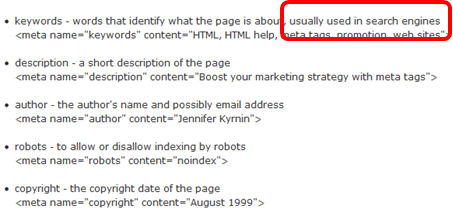
For example, the article about meta tags on About.com still indicates that keyword meta tags are used by search engines.

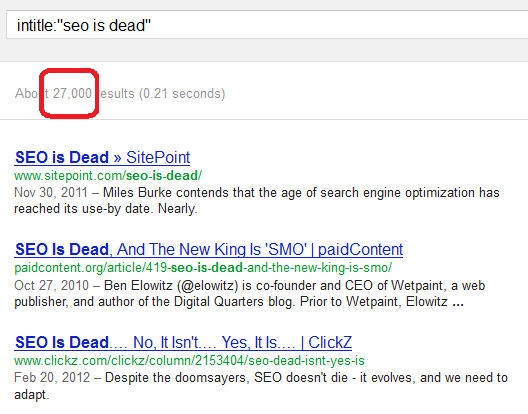
You can also read hundreds of articles saying that SEO is dead.
Just bear in mind that we are in the age of irresponsible journalism where far too many people grasp the power of the headline without having an understanding that influence comes with some level of responsibility.

19.  Pursuing A Short-Sighted SEO Strategy Such As Low Quality Links

One of the most frustrating things in SEO is seeing your spammy competitor outrank you while cheating at SEO. Eppie Vojt published a nice case study on SEOmoz about the tactics one spammy site used to rank for the term “car insurance”. I am sure someone at Geico was saying WTF?
Unlike the example in the SEOmoz article where the site got banned from the index, there are many examples that can be shown where these cheaters just keep on ranking. It gets frustrating, and you can get the “if you can’t beat ‘em, join ‘em” thing going on in your head. Don’t do it.
You don’t want to build your business so it is at odds with Google’s goals. No happy ending there.

20.  Thinking SEO Is More Important Than The End User

This is a way of living in Google’s cross hairs too. SEO is one marketing discipline, and there are many others. Given end users good, valuable “stuff” is one function that can’t be ignored. And Google and Bing are both hard at work on methods for determining what the best “stuff” is and favoring that in your search results.

21.  Constant Tinkering

This is a serious problem in many organizations. I have worked with people that are so wrapped up in tweaking the site over and over again, and their energy would be much better spent on the inbound components of SEO, such as link building, social media, PR, etc.

22. Not Understanding The Broader SEO Landscape

It is important to understand that the landscape is constantly shifting. We had Panda occur on February 24, 2011; Search, plus Your World launch on January 10, 2012; and on January 19th, 2012 we had the Page Layout algorithm which attacked ad heavy sites.
Even more recently, Google’s Amit Singhal was talking about semantic search saying it will impact 10% of results, and Matt Cutts was heard at SXSW saying a major update targeted at over-SEO’ed sites is coming.
Head spinning? The landscape is going to continue to shift. Make sure that you are not mired in specific details of today’s algos and the great majority of your effort goes to tactics that will stand the test of time.

23.  Obsession With SEO

This is one of the things that can lead to tinkering. SEO is important, and you need to pay attention to it. But, it is not life itself. Know what I mean?

24.  On-Page Only SEO

I have seen a lot of this. Major organizations learn that SEO matters and the first thing they do is focus on on-page SEO. Getting started is good, but on-page largely defines relevance for the search engines, and not ranking.
It is often hard for enterprises to deal with the link building side of things because of the problems in coordinating with other marketing disciplines such as PR and social media. Link building does not replace PR or social media or have to be at odds with it. Getting these things to work together brings a lot of leverage, so make sure you go past the “on-page only” stage of SEO awareness.
That’s my list for today! I am sure that there are many other aspects I have overlooked in the above. Please share your ideas/examples/frustrations in the comments below!
Opinions expressed in the article are those of the guest author and not necessarily Search Engine Land.

Popular Posts